An Introduction to Metallium Limited

Deven

New member
Game-Changing Critical Mineral Technology in the World's 'Return to Matter'

In late December the internet began lighting up with the circulation of a profound article on Substack by Craig Tindale called “The Return of Matter: Western Democracies' material impairment”. [*] The article is the subject of significant attention and it undoubtably has been reviewed by government policy makers and strategic planners in a variety of industries and major corporations. The article—which should be required reading—persuasively describes the state of US disinvestment and abdication, and Chinese ascendancy and domination, in the realm of Rare Earths and Critical Minerals.

Tucked somewhat discretely within the article’s “Solutions and Conclusions” section is mention of two game-changing technologies which Tindale suggests could play a part in the West’s efforts to swiftly identify and progress solutions to its present ‘intolerable’ situation:
  • RapidSX from Ucore Rare Metals (OTCQX: UURAF or TSXV:UCU), https://ucore.com
  • Flash Joule Heating (FJH) from Metallium Limited (formerly MTM Metals) (OTCQX: MTMCF or OTCQX ADR: MTLMY or ASX: MTM), https://metalliuminc.com
My intention below is to provide a high-level description of these technologies and a brief introduction to the two companies which own them. The objective is to supply readers with an idea of the technologies’ relevance within the US’ effort to begin to free itself from its present dependency on the outsourcing of midstream processing of Rare Earths and other Critical Minerals.

Before discussing the technologies, however, here is some brief context as to why these technologies are important, and why their relevance will increase over the coming months.

By 2024 China dominated global rare-earth production supplying 70% of mine output and nearly 90% of all processing capacity. The US over the same period had a reliance of over 80% on rare-earth imports. [*] [*] In 2025, in reaction to the Trump administration’s hard-ball trade negotiating tactics, the Chinese revealed their upper hand and began announcing and implementing new regulations to restrict or cut off many of these essential mineral inputs to entities outside of China. [*] [*]

The impact of this, of course, is exceedingly wide-ranging, affecting the US’ ability to function and advance within a multitude of areas such as consumer electronics, medical devices, AI, semiconductors, datacenters, energy infrastructure, robotics, advanced batteries, electric vehicles, aerospace, and most-ominously, defense systems.

In November 2025, US Treasury Secretary Scott Bessent announced a "warp speed" effort over the next 12 to 24 months to eliminate the United States' dependence on China for critical rare earth materials, referring to China's supply control as a "stranglehold" and a "sword" over the world. [*]

For the West, however, there are massive capital requirements, stringent environmental regulations, prohibitive development timelines, and a decayed knowledge and skill environment which present formidable or impossible barriers to deploying adequate solutions outside of China in the next several years.

As is widely recognized now, and which Tindale skillfully elaborates upon, the problem is not primarily in the acquisition of indispensable raw material input feedstocks, but in the processing and refining of them for consequent use in much of our modern world. Immediate solutions are needed relative to standing up processing and refining capability outside of China’s control, and in the US there are just a few players which have meaningful capability and capacity to contribute (and even fewer which are publicly traded).

It took China decades to secure and scale rare earth mining and processing. Expecting to replicate any substantial portion of this capacity using traditional approaches in the US would be fanciful. The crisis will need to be addressed by employing innovative and revolutionary technologies which change existing paradigms and open up new possibilities for feedstock and the economics of production. New solutions will need to be able to exploit already existing but until now under- or un-utilized sources such as industrial and electronic waste. Facilities, equipment, permits, processes, human resources, logistics, funding, etcetera will need to be able to come into place in a matter of months rather than years.

Appropriate solutions will need to:
  • Be capable of relatively rapid deployment
  • Provide modularity and scalability
  • Occupy reduced physical footprints
  • Be flexible and feedstock-agnostic
  • Be far more efficient and produce faster throughput
  • Produce accelerated separations and higher yields
  • Require lower energy and water consumption
  • Require fewer inputs and inventories
  • Reduce acids and reagent usage and waste byproducts
  • Be more environmentally compatible
  • Be constituted of non-restricted equipment and processes
  • Have lower CapEx and OpEx requirements
  • Demonstrate attractive and durable economics
I propose to you that the two companies, Ucore and Metallium, may be capable of accomplishing these objectives and meaningfully contributing to mitigating the severe vulnerabilities which presently endanger the world’s defense systems, tech economies, political autonomy, and the progression of modern life itself.

These companies bring to bear innovative new solutions which are superior to current legacy approaches, and which conceivably represent some of the most rapid paths to addressing the crisis in the near-term, and to diminishing China’s advantages and dominance in the long-run. Both of the technologies they offer represent revolutionary approaches with numerous significant advantages and compelling reasons for adoption. Both of these companies appear to be on the cusp of addressing governmental policy objectives, deploying their solutions within the market, impressing industry partners, and receiving greater investor attention and backing.
 
Last edited:
Metallium Limited

https://metalliuminc.com

https://www.flashmetalsusa.com


Description and Mission:
  • Metallium has undergone a major transformation from 2024 to 2025. Armed with new breakthrough technology and under the guidance of Managing Director & CEO Michael Walshe and Steve Ragiel, President of its subsidiary Flash Metals USA, the company transformed itself from MTM Critical Metals Limited to Metallium Limited, completing a strategic evolution into a US-centric industrial tech company focused on transforming the economics and possibilities of metal recovery. The company describes itself as “a global industrial technology platform with a mission to recover strategic and precious metals faster and more economically than any other method from waste and ore.” [*]
  • Metallium aspires to “bring mineral processing and metal recovery into the 21st century” and to (1) become the globally recognized benchmark technology for printed circuit boards, telecom scrap, server boards and semiconductor waste, (2) establish FJH as the preferred front-end upgrading step for rare earth element miners and magnet-metal producers, and (3) become the leading recovery route for strategic metals used in defense, AI, photonics and advanced semiconductors. [*]
  • The new company structure now has two core business units:
    • Under their Urban Mining Unit (Waste Recycling), a ‘Build-Own-Operate’ model, Metallium will purchase feedstock, own and operate the processing facility, and retain full economic interest in the recovered metals. Metallium aims to get over 90% recovery of these metals resulting in a projected (and quite compelling) margin of 40% or more after conservatively accounting for several additional factors. [*] Their first processing hub in Houston Texas is now operational, and they already have 3-5 additional hub locations earmarked in the US, and further expansion ambitions for Asia-Pacific, Europe, and the Middle East. [*] The company contends that even a smaller 1-to-10 ton per day operation can be highly profitable [*] meaning that the modularity and scalability of their technology can produce positive cashflow with modest plant sizes while these same plants are simultaneously built out to higher capacities.
    • Under their Mineral Processing Unit (Mining Projects), a ‘Processing-as-a-Service’ (PaaS) model, Metallium partners with miners or processing plant owners by supplying equipment and services, and then monetizes its technology via ongoing per-ton licensing fees and royalties linked to production. This approach enables the company to scale globally with minimal capital intensity by leveraging their partners' existing infrastructure while maintaining high-margin technology exposure. [*] The company anticipates prototyping a ‘Revision 2’ of its technology for this model likely starting in late Q2 2026 which is capable of treating ionic clays, hard-rock ore, monazite, MREC, and red-mud derivatives. [*] An agreement with Indium Corp (which essentially turns Indium’s waste liability into a profit center) provides Metallium with an immediate pipeline of valuable feedstock.

Technology
: Flash Joule Heating (FJH)
  • Metallium holds exclusive global licensing rights to its groundbreaking Flash Joule Heating technology [*] [*], a cutting-edge metal recovery and mineral processing method developed by esteemed researchers at Rice University, Texas USA in cooperation with the Defense Advanced Research Projects Agency (DARPA). [*]
  • Flash Joule Heating (FJH) is an advanced electrothermal process that significantly enhances metal recovery and mineral processing compared to traditional methods. By rapidly heating materials in a controlled atmosphere (3000 degrees+ C in milliseconds), FJH effectively extracts metals from a wide variety of mediums. It can unlock value from difficult materials like spodumene, rare earth concentrates and intermediates, red mud tailings, and e-waste — faster and more efficiently than traditional methods. [*] [*]
  • The IP is heavily protected by more than eight core patents pertaining to Flash Joule Heating and its associated chemistry pathways, and additional sub-patents are being added as the technology evolves and as parameters for new feedstocks are defined. [*] [*]
  • FJH is an innovative and economically disruptive metal recovery method which substitutes for other historic hydrometallurgy and pyrometallurgy alternatives. It simplifies complex flowsheets, eliminates acids and smelting, and enables high-margin recovery from challenging waste and ore streams. It is an incredibly elegant solution with advantages such as
    • feedstock agnosticism/versatility
    • smaller plant footprints
    • expanded siting options
    • rapid deployability
    • nimble scalability
    • lower capital and operating costs
    • diminished environmental hazards
    • attractive economics
    • (For example, initial capital expenditure can approach 5% or less of a traditional rare earth refinery and FJH requires only $30-$50 USD of electricity per ton of feedstock input.) [*] [*] Quite simply FJH represents the most rational pathway for swift mitigation of the China-triggered global supply chain crisis.
  • Yet FJH technology is not solely a disrupter or replacer, it can also function as an enhancer of already installed ‘sunk-cost’ capital by performing as a fronting process to materially increase the efficiency and yield of existing plants. Furthermore, FJH technology has the versatility to pivot as necessary, as metal prices or supply shocks dictate, to take advantage of the best present opportunities. It is an ascendant proprietary technology with no equivalent or direct rival in commercial refining. [*] [*]
 
Last edited:
Plants / Assets:
  • Gator Point Technology Campus – a 30,000 ft facility in Anahuac, Texas just east of Houston. [*]
    • On-site R&D Center: dedicated FJH innovation lab to continually improve the process and adapt it to new feedstocks.
    • Line 1 commissioning now – Q1 2026
    • Stage 1: 8,000 tons per year of Printed Circuit Board (PCB) capacity by Q3 2026
    • Stage 2: 16,000 tons per year in 2027
    • Stage 3: 50,000 tons per year in 2030 (This requires less than 1% market penetration of global PCB waste to achieve 2030 targets) [*]
    • Approximately 60 tons of mixed PCB already secured to support commissioning
    • Revenue generation in H1 2026
    • Line 2 commissioning by Q3 2026
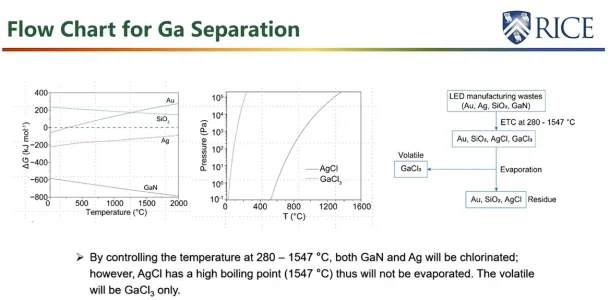
    • Stage 1: 350 tons per year, a dedicated ‘Specialty Materials Demonstration Line’ to process rare-earth-element tailings, refinery residues, and semiconductor feedstocks containing gallium and germanium.
    • Prototyping of fully continuous ‘Revision 2’ design starting in Q2/Q3 2026.
    • Once the Texas plant is ‘bulletproof’ and ready to replicate, then additional sites will be embarked upon.
  • 6+ US states in Metallium’s national deployment strategy by end of 2026
    • Additional sites shortlisted (provisional only) in: Louisiana, Florida, Nevada, Ohio, Virginia. (Options to rent, not to involve any major capital outlays. All have existing infrastructure and permits.) [*] [*]
    • Metallium’s pre-permitted multi-site footprint provides an immediate platform to scale in response to policy or market demand. Sites are effectively ready to go once the right strategic partner is identified and the FJH technology is ready to replicate, which is likely to be Q3 2026. [*]
    • Metallium’s facilities plans are aligned with U.S. government initiatives, including the Pentagon’s Defense Logistics Agency accelerated stockpiling of critical minerals. FJH’s ability to upgrade diverse feedstocks positions the company as one of the few US-based technology providers capable of supporting defense industry metals independence. [*]
  • According to the United States Geological Survey there are tens of thousands of legacy waste sites across the US left behind from over 200 years of prior mining and refining. [*] Notably, many critical minerals are geologically sparse, existing only in small amounts within geologic deposits rich in some other mineral. These sparse minerals are primarily produced as coproducts or byproducts during mining of other primary-target minerals because they are too expensive to mine independently for their own sake. Historically, many of these sparse critical minerals were left behind as mine wastes because they were not recognized, unprofitable, or technologically infeasible to extract and process. Metallium’s Flash Joule Heating technology is well-suited to play a major role in recapturing this vast and often more-easily-accessible dormant value.
    • Similarly, ‘Red Mud’, a byproduct of the process for producing aluminum, is generated at a rate of over 140 million tons annually worldwide, with an estimated 4 billion tons currently stockpiled. [*] Recovery of red mud’s contained valuable metals has been economically unviable due to inefficient and costly processing methods. Metallium’s Flash Joule Heating, however, is looking to be a revolutionary new way to solve this.

Partnerships / Feedstock / Offtake:
  • Vedanta Limited – a collaboration with India’s largest aluminum producer for Red Mud reprocessing solutions tapping a large source of critical metals and construction materials. [*]
  • Glencore - a binding e-scrap supply agreement with Glencore, a recycler of end-of-life electronics, lithium-ion batteries and other products containing critical metals. [*]
  • ElementUSA - a binding Letter of Intent with ElementUSA to collaborate on the recovery of gallium and scandium from red mud in Gramercy, Louisiana. Phase A: FJH units operating at Metallium’s “Gator Point” Texas plant to validate performance and establish baselines. Phase B: Relocation and expansion to Gramercy for up-scaled operation. The revenue model includes technology license fees, throughput-based processing fees, and revenue share on metal sales. [*] [*]
  • New Frontier Minerals Limited - a 10+ year collaboration with New Frontier Minerals, for exclusive rights to Harts Range Project material in the Northern Territory of Australia. (Note: FJH Treatment resulted in ‘exceptional and unprecedented’ beneficiation results, significantly increasing (dysprosium and terbium rich) TREO in a Single Step Flash. China controls almost 100% of these two heavy rare earths today and the US Department of War is actively looking for alternative sources.) [*]
  • Indium Corporation – a strategic partnership with Indium Corporation, one of the Western world’s largest suppliers of refined specialty technology metals. Indium Corp operates 16 facilities across 8 countries. Following QA/QC validation, both parties expect to advance discussions toward binding agreements. [*] [*] [*]
  • Ucore Rare Metals Inc – a Technology Collaboration Agreement with Ucore for rare earth processing and Integration of Metallium’s FJH technology with Ucore’s RapidSX separation technology, enabling diverse REE feedstocks to be processed into separated oxides. The collaboration delivers the first fully US-based rare-earth refining pathway capable of treating both primary and recycled feedstocks. [*]
  • Meteoric Resources (Australia, Brazil) - to process Mixed Rare Earth Carbonate to remove impurities and enrich magnet rare earths for downstream separation. [*]
  • Dynamic Lifecycle Innovations – a major e-scrap recycling firm for high-value Printed Circuit Boards feedstock [*]
  • Plastic Recycling Inc – a major e-scrap recycling firm for high-value Printed Circuit Boards feedstock. [*]
  • U.S. Department of War (DoW) - Metallium received a small contract for gallium recycling research. Successful completion of Phase I sets Metallium up for follow-on Phase II funding of up to USD$1 million, and consequently potential Phase III commercialization contracts worth up to $100 million. [*] [*]
  • KnightHawk Engineering - Global specialists in high-temperature engineering with world-class expertise in scaling novel process technologies. Clients include Rio Tinto, Sasol, NASA, Chevron, Texaco. [*] [*]

Government Support:
  • Metallium is actively pursuing seventeen individual grants from both the U.S. Department of War and Department of Energy to drive innovation in critical metals recovery and supply within the U.S. The company has stated on multiple occasions that they believe they have “a very strong opportunity to get some substantial checks.” [*] [*]
 
The Science of Flash Joule Heating (FJH)

Instead of solvent extraction, the Flash Joule Heating (FJH) approach is to cause precision-targeted chemical reactions and bond-breaking with the Joule Effect (rapid, instantaneous heating under an atmosphere of chlorine) to selectively evaporate or distill either desirable or undesirable elements within the treated material. For its original application, graphene, it has now been in successful commercial production for over 18 months.

The process involves performing an Inductively Coupled Plasma Mass Spectrometry (ICP-MS) analysis on the feedstock and then creating a thermodynamic plot of the constituent elements. By plotting the free energy formation of the metal chlorides against temperature, exploitable windows can be identified, and individual elements can be selectively targeted and recovered in just a few steps rather than the dozens, or many more, often required with SX.

1770598119309.webp


The following video from Dr James Tour and Rice University (the technology's inventor) can provide a general sense of the science:

www.youtube.com/watch?v=AY_gnlqbT5I

13:35 – 19:40 Electronic Waste
19:40 – 23:15 Magnets
23:15 – 25:05 Ores
26:05 – 29:05 Industrial Waste
29:05 – 30:05 Separation of REEs
 
Back
Top